
Resources · Owning
What does it cost to run a sauna?
Less than most people fear. It comes down to one sum — the heater's kilowatts, times how long it's on, times your electricity rate. A typical session uses only a few kilowatt-hours, because the heater pulls full power heating up and then cycles to hold. The Bay Area's high rate is the biggest variable, so the honest answer is: here's the math, plug in your bill.
By Vadim, licensed general contractor (GC · C-10 · C-20) · Last reviewed July 2026
It's one simple sum
Running cost isn't a mystery — it's multiplication:
heater kilowatts × hours it's running × your rate per kilowatt-hour = the cost of a session
Every part of that is knowable. The one people get wrong is the middle: a heater doesn't draw its full rating the whole time — it pulls hard to heat the room, then cycles on and off to hold. So the energy a session actually uses is a lot less than "kilowatts times the full hour."
How much energy a session really uses
Most of a session's energy goes into the heat-up — roughly the first half hour, when the heater runs near full power. Once it's hot, it idles on and off to hold temperature, sipping rather than gulping. Add it up and a typical home-sauna session lands in the range of a few kilowatt-hours — a handful, not dozens. That's a similar order to running an electric oven for a while, not a hidden second mortgage.
Your rate is the real variable — and it's high here
This is where the Bay Area matters. Our electricity rates are among the highest in the country, and your rate per kilowatt-hour swings the number far more than the sauna itself does. Pull up your utility bill, find your rate per kWh, and multiply it by the few kilowatt-hours a session uses — that's your real running cost, in your own numbers, not a made-up average. It's almost always smaller than people brace for.
What moves your running cost
Heater size
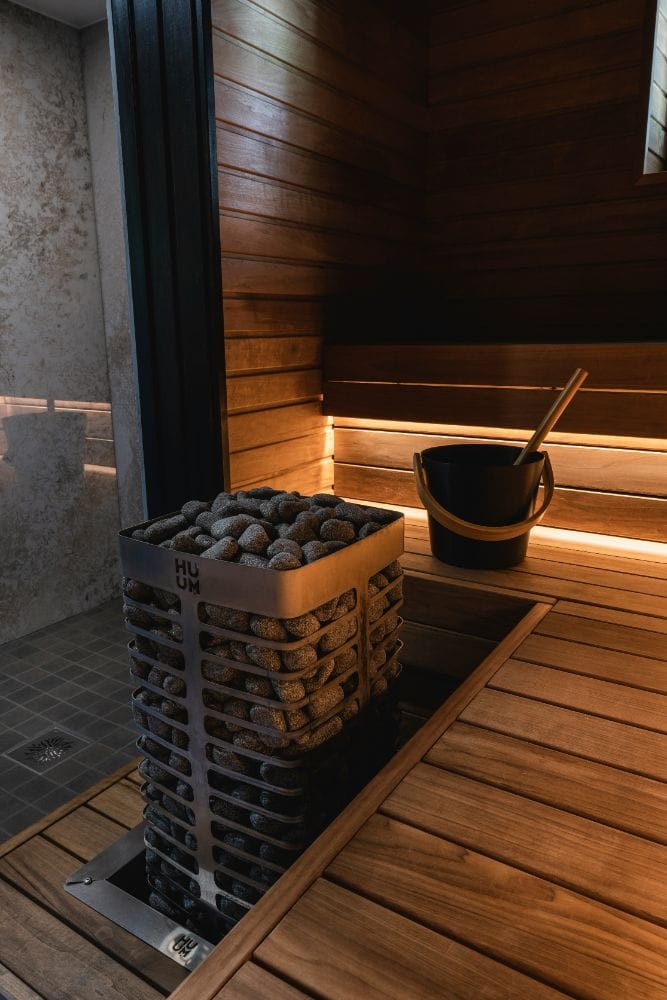
A bigger room needs a bigger heater, and more kilowatts means more energy per session. Sizing the heater to the room — not oversizing it — is the first lever.
How often you use it
The single biggest factor. A couple of sessions a week and an every-day habit are very different monthly numbers — the sauna doesn't cost anything sitting cold.
How long you preheat
Most of a session's energy goes into the heat-up. A quick preheat and a lid on wasted warm-up time keeps it efficient.
Insulation & build quality
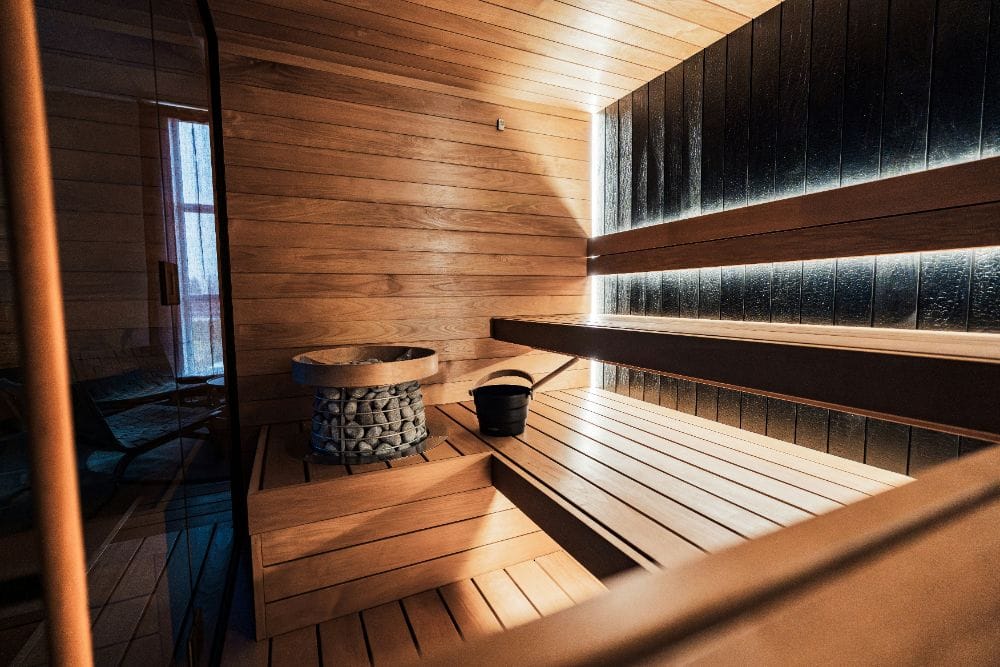
A well-insulated, well-sealed room holds heat and lets the heater cycle off more — so a better build quietly pays you back every session. A leaky one runs the heater harder.
That last one is a build-quality dividend: insulation and sealing you pay for once keep paying you back every session. It's part of why a properly built sauna costs less to live with than a cheap one — the build-cost guide covers the up-front side, and the 240V guide the circuit behind it.
Running cost FAQ
Cost-to-run questions, straight answers.
How much does it cost to run a sauna?
Does a sauna use a lot of electricity?
Is it cheaper to leave the sauna on or reheat it each time?
Does a bigger sauna cost more to run?
Electric or wood-burning — which costs less to run?
Weighing the running cost?
We'll size it to run efficiently — and tell you straight.
Tell us the room and how you'll use it, and we'll size the heater and build it to hold heat, so it costs less to run for the life of it. A sauna specialist answers, and the licensed load check on the free site visit tells you exactly what your panel and circuit need.
The site visit is free — and you keep the work
- A layout sketch for your space
- Heater sizing done right for the room
- A licensed 240V load check
- Your permit path, mapped
A real, fast callback — no email runaround.